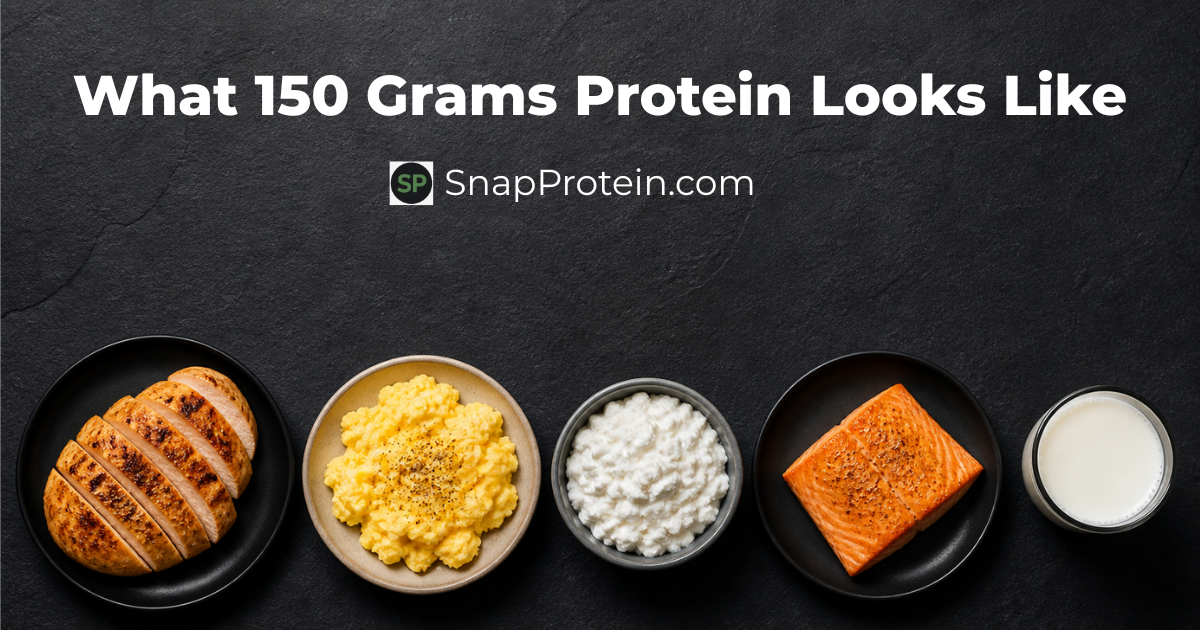
The Short Answer
Here's what 150 grams of protein looks like in a day: 3 eggs + Greek yogurt at breakfast (35g), a large chicken breast at lunch (45g), cottage cheese mid-afternoon (25g), and ground beef or salmon at dinner (45g). Four eating occasions, real food, no extreme portions.
Here's what 150 grams of protein looks like in a day — and why it's the right target for men over 40 who have already built the 120–130g habit and want to push further without jumping straight to the more demanding 160g mark.
150g sits in a specific zone: past maintenance, not yet full recomposition. For men training 3–4 times per week and trying to lose some fat while holding muscle, this is the number that starts to move the needle on body composition rather than just preventing loss.
150g is where you start taking it back.
Where 150 Grams Fits in the Range
Who is 150g right for? Men in the 165–200 pound range who are training consistently and want to shift body composition — not just preserve what they have. Also the right next step for anyone who has been hitting 130g reliably and wants to push higher without jumping straight to 160g.
What 150 Grams of Protein Looks Like: A Full Day
Same foods, same meal structure you're already using. The step from 130g to 150g is one larger portion at dinner and a solid afternoon snack.
Getting From 130g to 150g: The Two Changes
If you're already hitting 130g, the move to 150g requires exactly two things — not a new diet, not more meals.
| Change | What to Do | Protein Added |
|---|---|---|
| Add an afternoon snack | 1 cup cottage cheese or 1 scoop whey | +25g |
| Increase dinner portion | 5oz → 7oz beef or salmon | +14g |
| Slightly larger lunch | 5oz → 7oz chicken breast | +13g |
| Add Greek yogurt to breakfast | If not already included | +17–20g |
Pick any combination that adds up to roughly 20g. That's the entire upgrade from 130g to 150g. If you haven't built the 130g habit yet, start there — see what 130 grams of protein looks like first. And the foundation for all of this is understanding what 120 grams of protein looks like in a real day.
Why 150g Is a Different Kind of Target Than 120g or 130g
At 120g and 130g, protein is doing defensive work — preventing muscle loss, slowing the effects of anabolic resistance, maintaining what you've built. That's meaningful and worth doing.
At 150g, protein starts doing offensive work. Combined with consistent resistance training, 150g gives your muscles enough raw material to not just maintain but to respond to training with actual growth. The research on body recomposition in men over 40 consistently points to this range — 1.5–1.6g per kilogram of bodyweight — as the threshold where the equation shifts from preservation to rebuilding.
The math for a 185-pound man: 185 lbs ÷ 2.2 = 84kg. At 1.5g/kg that's 126g. At 1.8g/kg that's 151g. For an active man at this weight, 150g sits right at the upper end of the maintenance range and the lower end of active recomposition. It's the productive middle ground.
Tracking Matters More as the Number Gets Higher
At 100g, a rough estimate gets you close enough. At 120g, feel starts to work for men who eat consistently. At 150g, you need to actually know your number — because the margin between thinking you hit 150g and actually hitting it is wide enough to matter.
The habit that makes 150g consistent isn't eating more — it's knowing your running total by mid-afternoon. If you're at 80g by 2pm, you know exactly what the afternoon snack and dinner need to do. If you're at 105g, you have flexibility. That visibility is the difference between hitting 150g most days and hitting it occasionally.