The Short Answer
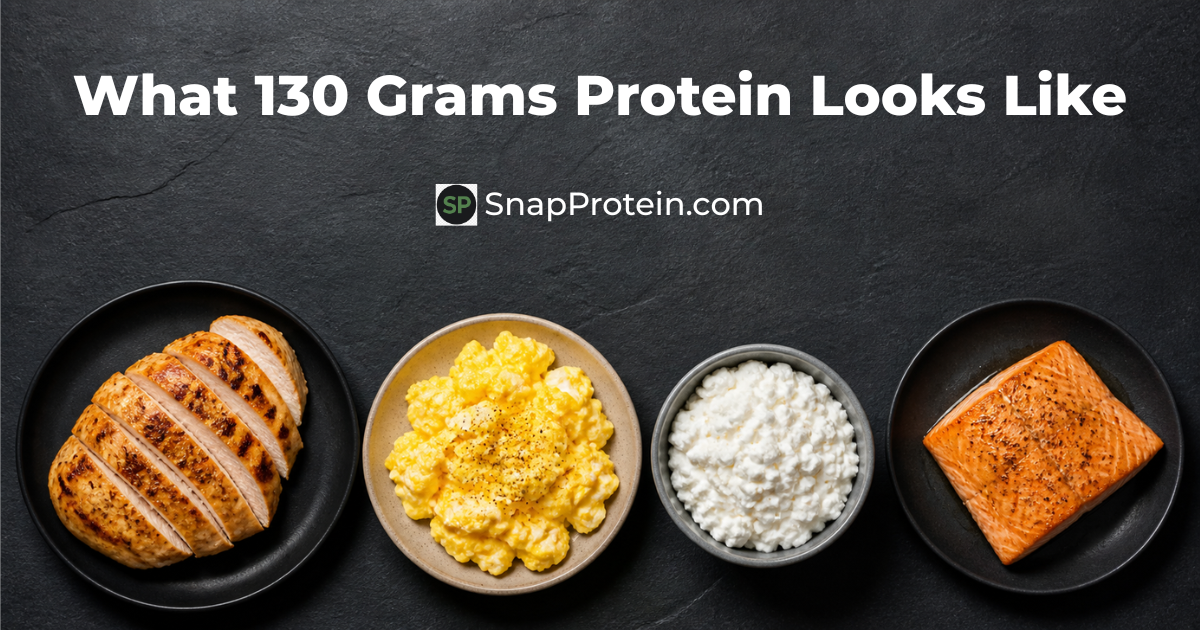
130 grams of protein in a day looks like: 3 eggs + Greek yogurt at breakfast (35g), a large chicken breast at lunch (45g), cottage cheese or a shake mid-afternoon (25g), and ground beef or salmon at dinner (35g). Four eating occasions, real food, no extreme portions.
Here's what 130 grams of protein looks like in a day — using real food most men already eat, spread across four simple eating occasions.
If you've already seen what 120 grams of protein looks like, you know that three solid meals gets most men close to the baseline. 130g is the next step — the number where muscle preservation starts to feel less like effort and more like a consistent habit.
The difference between 120g and 130g is not another meal. It's one small addition — a cup of cottage cheese, an extra egg, or a slightly larger dinner portion. But seeing what that looks like in practice is what makes it stick.
130g is where you start to hold ground.
Where 130g Fits in the Range
Who is 130g right for? Men in the 160–185 pound range who are training 3+ times per week and want to hold their muscle mass as they age. It's also the right next step for anyone who has been hitting 120g consistently and wants to push slightly higher without overhauling their diet.
What 130 Grams of Protein Looks Like: A Full Day
Here's a complete sample day. Same foods you're already eating, same meal structure — just dialed in to hit 130g.
That day actually comes in closer to 140g — which is fine. Hitting 130g as a floor means some days you'll land at 135g or 140g. That's the right direction. The target is a floor, not a ceiling.
The Difference Between 120g and 130g in Practice
Most men who are hitting 120g consistently find that 130g requires exactly one change. Not a new meal, not a restructured diet — just one deliberate addition somewhere in the day.
| One Addition | When | Protein Added |
|---|---|---|
| 1 cup cottage cheese | Afternoon snack | +25g |
| 1 extra egg at breakfast | Morning | +6g |
| 2 extra oz chicken at lunch | Midday | +12g |
| 1 scoop whey in water | Afternoon | +25g |
| Greek yogurt added to breakfast | Morning | +17–20g |
| 5oz → 6oz beef at dinner | Evening | +7g |
Pick one. That's the 120g to 130g upgrade. If you haven't built the 120g habit yet, start there first — see what 120 grams of protein looks like before trying to jump to 130g.
Why the 10g Gap Between 120g and 130g Actually Matters
Ten grams doesn't sound like much. But compounded over a week, it's 70g of additional protein. Over a month, it's nearly 300g more protein reaching your muscles than at the 120g baseline.
At the cellular level, that consistent extra stimulus — combined with resistance training — is the difference between holding muscle and slowly losing it. The research on anabolic resistance after 40 shows that older muscle tissue needs more protein input to produce the same muscle-building response. Every gram above the bare minimum closes that gap a little further.
The 130g sweet spot: For men in the 165–190 pound range training 3+ times per week, 130g sits right at the 1.5g/kg mark — the point where research consistently shows meaningful muscle preservation outcomes. It's not extreme. It's just enough.