The Short Answer
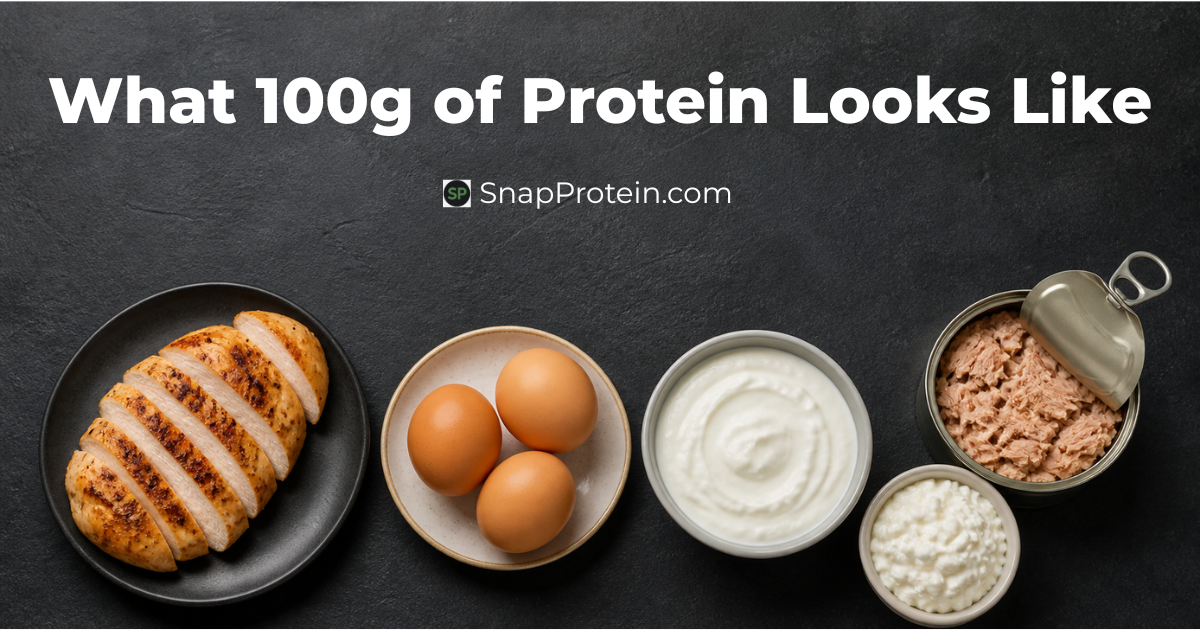
100 grams of protein in a day looks like: 3 eggs + Greek yogurt at breakfast (35g), a chicken breast or tuna at lunch (35g), and ground beef or salmon at dinner (30g). Three meals, real food, no supplements required — and a meaningful step up from where most men actually are.
Before you can hit 120g of protein a day, you have to be able to hit 100g. And before you can hit 100g reliably, you have to know what it actually looks like on a plate.
Most men who think they're eating enough protein aren't. Not because they're making bad choices — but because protein is invisible until you track it. A day that feels solid can easily land at 70g. That gap between what it feels like and what the number actually says is where muscle is quietly being lost.
100g isn't the ultimate target. But it's the right starting point — achievable without overhauling your diet, and far enough above where most men are to make a real difference.
They're just 30–40g short every single day.
Where 100g Fits in the Protein Range
Why start at 100g instead of jumping straight to 120g? Because habit formation matters more than perfection. A man who consistently hits 100g will outperform a man who hits 120g for a week and burns out. Build the pattern first. The number follows.
What 100 Grams of Protein Looks Like: A Full Day
Here's a complete sample day built around foods most men over 40 already eat. Three meals, nothing exotic, no meal prep required.
or: 1 can tuna (5oz) + crackers
Notice what's not on that list: protein bars, multiple shakes, specialty foods, or eating every two hours. Just three real meals, each anchored by a solid protein source. That's all 100g requires.
The Foods That Make 100g Easy
Getting to 100 grams consistently comes down to knowing which foods carry the most protein per serving. These are the ones to build your meals around.
| Food | Serving | Protein |
|---|---|---|
| Chicken breast, grilled | 5 oz | 32g |
| Ground beef, 90% lean | 5 oz | 33g |
| Tuna, canned in water | 5 oz can | 26g |
| Greek yogurt, plain | 1 cup | 20g |
| Eggs, whole | 3 large | 18g |
| Cottage cheese, low-fat | 1 cup | 25g |
| Salmon, cooked | 5 oz | 32g |
| Whey protein shake | 1 scoop | 25g |
What Getting From 100g to 120g Actually Takes
Once 100g feels automatic — once you're hitting it most days without thinking hard about it — the step to 120g is smaller than it sounds. The difference is roughly one additional serving.
For most men that means one of these additions:
- Add a cup of cottage cheese to lunch
- Go from 5oz to 6–7oz at dinner
- Add a protein shake as an afternoon snack
- Swap a light breakfast for the eggs + Greek yogurt combo
That's it. No second diet. No new meal structure. Just one deliberate addition per day on top of the 100g foundation you've already built. For the full breakdown of what that next step looks like, see what 120g of protein actually looks like.
Why Tracking Is the Only Way to Know
Here's the problem with estimating protein intake: men are consistently wrong about it. Not because they're careless — but because protein is invisible in the way calories are not. A plate of food doesn't announce its protein content. A meal that feels high-protein might be 25g. Or it might be 45g. You genuinely cannot tell by looking.
The men who close the gap aren't eating differently than men who don't. They're just seeing the number. Knowing at 2pm whether you're at 55g or 80g changes what you do at dinner. That mid-day visibility is worth more than any specific food choice.
You don't need to track everything — just protein. One number, checked once or twice a day, tells you everything you need to know.