The Short Answer
- Fibermaxxing is trending — but the underlying problem it's solving is real: 97% of American men don't hit their daily fiber target, and most have no idea
- Men under 50 need 38g of fiber per day. Men over 50 need 30g. The average man gets 10–15g. High-protein dieters often get even less
- Protein doesn't cause constipation — but high-protein diets crowd out the fiber-rich foods that keep digestion moving. That's the actual problem
- The 1990s fiber hype was partly overblown — fiber isn't a magic cure and some claims didn't hold up. The truth is in the middle: fiber matters, but source and gradual increase matter more than raw grams
- A 2021 Imperial College London study found higher fiber intake was directly associated with greater skeletal muscle mass and grip strength in adults over 40. This isn't just a gut issue
- You don't need to overhaul your diet — two or three targeted additions to what you're already eating closes most of the gap
I'll be honest: I hadn't been paying much attention to fiber. I've been focused on protein — hitting my daily target, distributing it across meals, making sure the overnight window is covered. And for most of that time, I had decent digestion without thinking much about it, so fiber just wasn't on my radar.
Then the fibermaxxing trend started showing up everywhere, and my honest first reaction was skepticism. I grew up in the era of the high-fiber 90s — the oat bran craze, the Burkitt hypothesis that high-fiber diets prevented colon cancer, the push to eat more bran cereal. And I knew that a lot of those specific claims didn't pan out in the clinical research. So I had assumed fiber was one of those things that got oversold and then quietly corrected.
Turns out the truth is more nuanced. The 90s claims were partly overblown. But the underlying problem — that most men, especially men running high-protein diets, are chronically under-eating fiber — is very real. And the consequences go beyond digestion in ways I didn't expect.
Here's what I found when I actually looked at the research.
First: What Fibermaxxing Actually Is
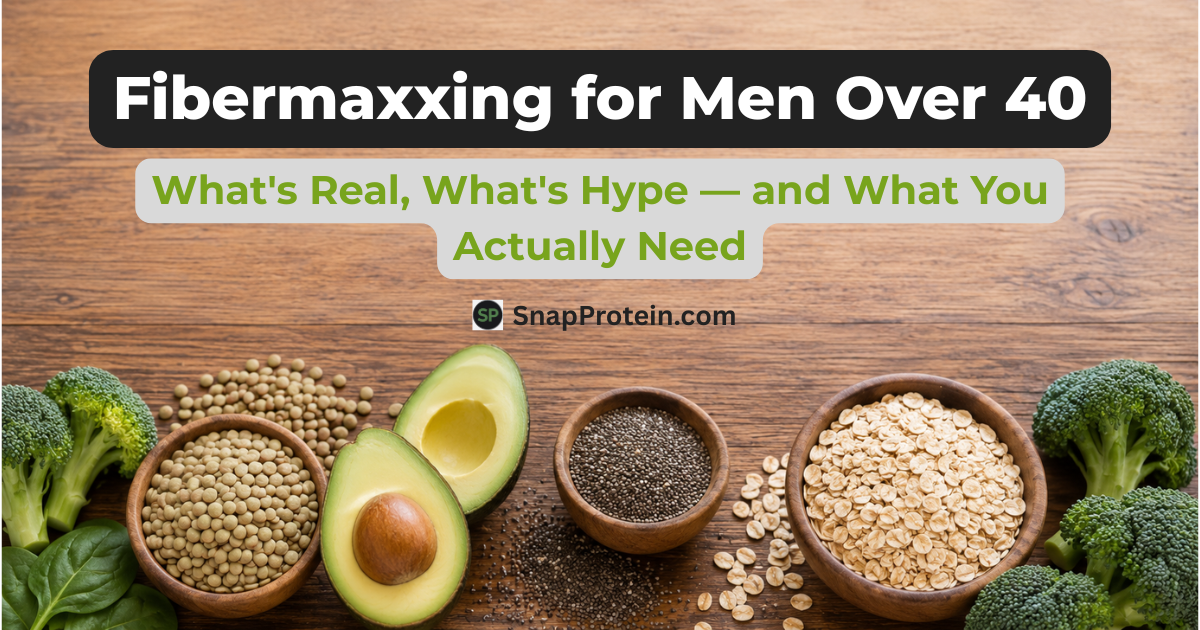
Fibermaxxing is simple: the intentional practice of maximizing daily fiber intake by adding high-fiber foods to every meal — vegetables, legumes, seeds, whole grains, and fruit. That's it. No proprietary system, no supplement stack, no program to buy. The term came out of TikTok and Gen Z wellness culture in 2025, but the concept is basic nutrition that's been recommended for decades.
What's new isn't the advice — it's the reframe. The protein conversation of 2024–2025 taught a lot of men to think in grams, track a target, and build habits around hitting a number. Fibermaxxing is doing the same thing for fiber. Given that 97% of men aren't meeting their daily fiber target, applying that same tracking mentality to fiber is probably overdue.
The reason it's getting attention now is the gut-muscle connection that's emerged in recent research — which we'll get to. But first, the honest history lesson, because your skepticism about the 90s fiber claims is valid.
The 90s Fiber Hype: What Was Overblown
The original modern fiber hypothesis came from Dr. Denis Burkitt, a British surgeon who observed in the 1970s that African populations eating high-fiber traditional diets had dramatically lower rates of colon cancer, heart disease, and diabetes than Western populations. Burkitt's conclusion: fiber was the protective factor. His work shaped public health recommendations for decades.
The problem is that subsequent research didn't fully validate the specific claims. A large randomized controlled trial published in the New England Journal of Medicine in 2000 found no significant reduction in colorectal cancer recurrence from high-fiber diets. Research on fiber and constipation showed mixed results — some studies found that increasing fiber actually worsened constipation in people with slow gut transit, and one study found significant improvement in constipation after patients reduced fiber intake. Some systematic reviews concluded that "a strong case cannot be made for a protective effect of dietary fiber against colorectal cancer."
So yes — parts of the 90s fiber message were oversold. The anti-fiber reaction in the carnivore and low-carb communities has a legitimate basis in that research.
The Truth Is in the Middle — and It Matters for How You Read This
The 90s overclaimed. The anti-fiber reaction overcorrects. Here's where the honest evidence-based position lands: fiber isn't a magic cure and the specific cancer prevention claims were overstated. For men who already have excellent digestion on a low-fiber diet and no gut symptoms, there's no emergency.
But the evidence for fiber's role in gut microbiome health, insulin sensitivity, cardiovascular markers, and — critically — the metabolic environment that supports muscle maintenance after 40 is solid and growing. These benefits aren't from high-insoluble-fiber diets that overwhelm the gut. They're from consistent, moderate fiber intake from whole foods — vegetables, legumes, seeds — added gradually.
The people the fiber research actually helps are men who've crowded fiber-rich foods out of their diets by going heavy on animal protein. That's most men over 40 on a high-protein diet. Not because protein is bad. Because something had to move to make room for the protein, and it was usually the vegetables and legumes.
Why High-Protein Diets Create a Fiber Gap
Here's the mechanism that matters for this audience specifically. Protein itself doesn't cause constipation or gut problems. What causes the problem is what happens to your diet when protein takes center stage.
If your meals are built around chicken breast, eggs, ground beef, Greek yogurt, cottage cheese, and protein shakes — all excellent protein sources — those foods contain zero grams of fiber. When those foods become the majority of what you eat, and grains, vegetables, legumes, and fruit get reduced or removed to hit calorie or carb targets, fiber intake collapses.
Less fiber means less bulk in stool. Less bulk means slower gut transit. Slower transit means harder, drier stools and eventually constipation. High protein metabolism also increases urea production, and the kidneys pull more water from the body to excrete it — which further dries out the stool. The result is a gut environment that's running on increasingly compressed fuel with progressively less water.
The Fiber Gap: Where Most Men Actually Land
Most men are already running a 60–70% fiber deficit. High-protein dieters often run an 80% deficit without knowing it.
Your Daily Fiber Targets (Actual Numbers)
The recommended intake isn't as high as the 90s messaging made it seem — it drops meaningfully after 50, which most men don't know.
The reduction after 50 reflects lower overall calorie intake — the fiber target is partially calorie-dependent. For men over 50, 30g is achievable without dramatic dietary changes if you're adding fiber-rich foods intentionally to what you're already eating. The key word is intentionally — it won't happen by accident on a high-protein diet.
The Muscle Connection Most Men Miss
Here's the part that changed how I thought about this. In 2021, researchers at Imperial College London analyzed dietary data from 6,454 adults aged 40 and older from the US National Health and Nutrition Examination Survey. They found that higher dietary fiber intake was directly associated with greater skeletal muscle mass and grip strength — independent of protein intake.
Fiber doesn't build muscle directly. But it supports the gut microbiome, and the gut microbiome affects a remarkable number of systems that matter for muscle maintenance after 40: protein absorption efficiency, inflammation levels, insulin sensitivity, and short-chain fatty acid production (which has downstream effects on muscle metabolism).
Men running high-protein diets who are simultaneously running a fiber deficit are potentially limiting how effectively their protein actually converts to maintained muscle mass. The protein is coming in. The microbiome environment that helps process and absorb it is running on empty.
This connects directly to the anabolic resistance conversation — the reduced muscle sensitivity to protein signals that develops after 40. Chronic gut inflammation from a disrupted microbiome is one of the contributing factors to anabolic resistance. Fiber is part of what keeps that inflammation in check.
Myth vs. Fact: The Fiber Claims Worth Knowing
Fiber prevents colon cancer. This was the big 90s claim. Large RCTs did not find significant colorectal cancer prevention from high-fiber diets in people who already had polyps. Observational data suggested a benefit; intervention data was much weaker.
Fiber supports gut microbiome health and reduces systemic inflammation — which has broader benefits for metabolic and cardiovascular health. The cancer-prevention story was oversold. The gut health story is solid.
More fiber always fixes constipation. For people with slow gut transit, adding insoluble fiber can actually worsen constipation by adding bulk to stool that isn't moving. Some studies show improvement after fiber reduction.
Soluble fiber — oats, legumes, fruit — generally supports regularity. Insoluble fiber is more variable. The type and source matter. Gradually increasing fiber from whole foods rarely causes the problems that sudden supplementation does.
You don't need fiber on a carnivore or high-protein diet. Some people tolerate very low fiber diets without obvious gut symptoms. But "no symptoms" isn't the same as an optimal gut microbiome or optimal metabolic health.
The gut microbiome requires prebiotic fiber to maintain diversity and short-chain fatty acid production. Low diversity microbiomes are associated with higher inflammation and worse metabolic outcomes over time — even without obvious digestive symptoms.
High protein causes constipation. Protein itself is not the culprit and won't directly cause constipation in people eating enough fiber alongside it.
High-protein diets crowd out fiber-rich foods, and it's the fiber deficit that causes the gut issues. The fix is adding fiber back alongside the protein — not reducing protein. Lentils, for example, deliver both 18g protein AND 15g fiber per cup.
Fibermaxxing means eating 60–70g of fiber per day. The trend term implies extreme maximization, and some TikTok content pushes unrealistically high targets that cause bloating and gut distress.
The actual target is 30–38g depending on your age — and most men starting from 10–15g should increase gradually over 4–6 weeks. Jumping fiber intake dramatically causes bloating and gas as the microbiome adjusts. Slow and steady is the right approach.
The Best Fiber Sources for Men on High-Protein Diets
The goal is adding fiber without dramatically changing calorie intake, disrupting protein targets, or eating foods that require major preparation. Here are the best options — ranked by fiber density and practical fit with a high-protein eating pattern:
| Food | Fiber | Protein | Serving | Notes |
|---|---|---|---|---|
| Lentils ★ | 15g | 18g | 1 cup cooked | Best dual-purpose food — hits fiber AND protein simultaneously |
| Black beans | 15g | 15g | 1 cup cooked | Easy add to any meal — eggs, meat, salads |
| Chia seeds ★ | 10g | 5g | 2 tablespoons | Mix into Greek yogurt or cottage cheese — zero prep |
| Avocado | 10g | 3g | 1 whole | High fat — works well alongside lean protein meals |
| Chickpeas | 12g | 14g | 1 cup cooked | Roasted chickpeas make a solid high-protein, high-fiber snack |
| Broccoli | 5g | 4g | 1 cup cooked | Low calorie, pairs with any protein — steamed in 5 minutes |
| Oats | 4g | 5g | ½ cup dry | Soluble fiber — easy breakfast alongside eggs |
| Almonds | 3.5g | 6g | 1 oz (23 nuts) | Portable snack — adds fiber between meals without prep |
| Edamame | 8g | 17g | 1 cup shelled | High protein AND high fiber — frozen, microwaveable, done |
★ Top picks for men on high-protein diets looking to close the fiber gap with minimal disruption.
A Practical Starting Point — Not a Diet Overhaul
The goal is not to rebuild your diet from scratch. The protein strategy that's already working stays in place. What you're adding is a fiber layer on top of it. Here's how to do that without bloating, without major preparation burden, and without disrupting protein targets:
Closing the Fiber Gap Without Disrupting Your Protein Strategy
The Bottom Line on Fibermaxxing
The trend name is a little ridiculous. But the problem it's pointing at is real, the science behind the gut-muscle connection is solid, and the practical fix is far simpler than most men expect.
You don't need a fiber supplement. You don't need to overhaul a diet that's working for protein. You need two or three targeted additions to what you're already eating, introduced gradually, with enough water to support the change.
Men over 40 focused on sarcopenia prevention and muscle maintenance have every reason to care about fiber — not because it builds muscle, but because it supports the gut environment that determines how effectively the protein you're already tracking actually works. Sleep, protein, and recovery are the main levers. The fiber gap is the one most men running high-protein diets are unknowingly leaving open.
Close it gradually. Your gut — and the muscle you're working to keep — will notice.